To begin with I have to admit I am not an expert on the cost of using mobiles, tablets etc outside of the UK. But after my daughter’s recent holiday to Spain I have delved a bit deeper into the sometimes murky and generally confusing depths of mobile charges.
I naively thought all I had to do was to inform mobile provider (Virgin) that x phone would be in Spain for a few weeks (the contract is in my name) and that would be that, as I vaguely knew the EU had just put a cap on calls making them a more reasonable price.
On her arrival I received a distressed call from her about no internet. OK no problem I thought. I called Virgin and was restricted to buying just 100mb of use, to get more you need to do it 30 days in advance, and even then I think you couldn’t buy much more.
How far does 100mb give a teenager – up to an hour if lucky. So that was that, an unhappy daughter with no internet. Because the phone is on contract she couldn’t buy and install a local SIM card but more on that later.
So for the next family visit abroad I want to be prepared.
In this post I’m generally using Virgin as an example. I’m not recommending particular companies more of a guide of what to look out for.
Decide whether to have ‘Roaming’ set up – this can be done online or by calling your provider. With it on you will be charged at the rates for the region you are in, in the EU it makes more sense than outside of it. Alternatively you can have your roaming switched off and use local wi-fi, you can find free wi-fi connections in bars and hotels etc, some may charge for the service. In the EU I prefer the ‘roaming’ route as I don’t use the mobile much and prefer the safety net.
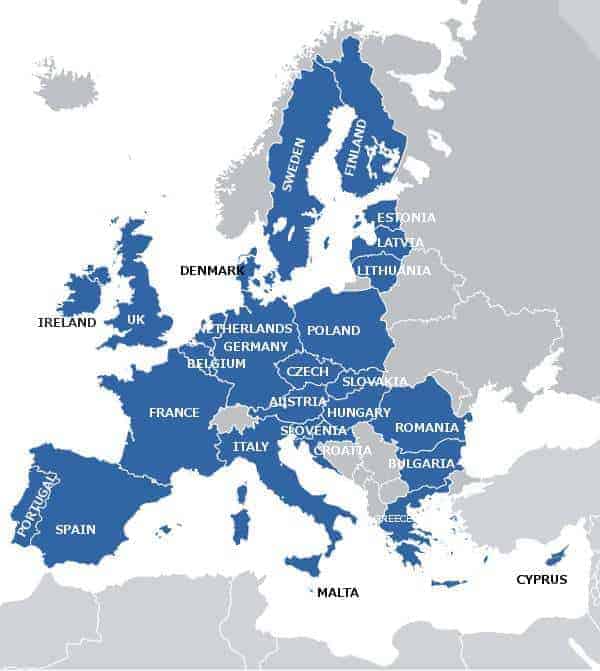
Travelling to an EU country?
On 1 July 2014 the EU introduced new caps on mobile phone usage, further reducing the cost of roaming in the EU.
EU maximum charge
Making a call 19p/min. Receiving a call 5p/min. Sending a text 6p/text
Which is all pretty reasonable for general calls and texts. However it gets a bit more complicated and expensive when you come to ‘Data’ use, that is using your mobile or tablet for browsing the internet.
EU Data Travel Passes last for 30 days
EU law requires Virgin or any other provider to limit data usage to a value of €50 and not allow you to transmit or receive more data when that limit is reached unless you proactively elect to do so. If you purchase EU data passes, your data usage will not be limited to €50 but will be limited to the value of data purchased.
Warning. If you plan only to browse the internet and check your emails a 250MB Travel Pass costing £20 may suffice. But if you plan to watch videos, download music etc you’ll need a lot more. Also turn off automatic app updates and you’ll need for Tablets, to disable automatic updates for Windows etc otherwise you could end up paying a tidy sum.
How much will it cost to use my phone outside of the EU?
Outside the EU it’s a different story all together. Mobile carriers can charge what they like for calls, texts and data, as much as £3/min to make a call and £2.50/min to receive.
DATA
Accessing mobile web, mobile broadband & BlackBerry outside the European Union is per MB: Virgin £5; Orange £8 . That equates to viewing just 10 webpages. It make the EU 250MB Travel Pass costing £20 look a relative bargain.
On the Plane
Unless you have to don’t use your mobile whilst on the plane, and definitely avoid watching YouTube etc and downloading.
Making a call 2.50 per minute Sending Receiving Texts: £1 a text Free Accessing Mobile Web: £9 per MB
What to do?
So far, using your mobile phone for calls and texts in the EU is reasonable, although you have to be careful about data. On the other hand outside of the EU unless you manage your usage carefully you could be looking at a hefty bill. So what can be done?
How to Find Free Wi-Fi
Before you set off do a bit of homework.
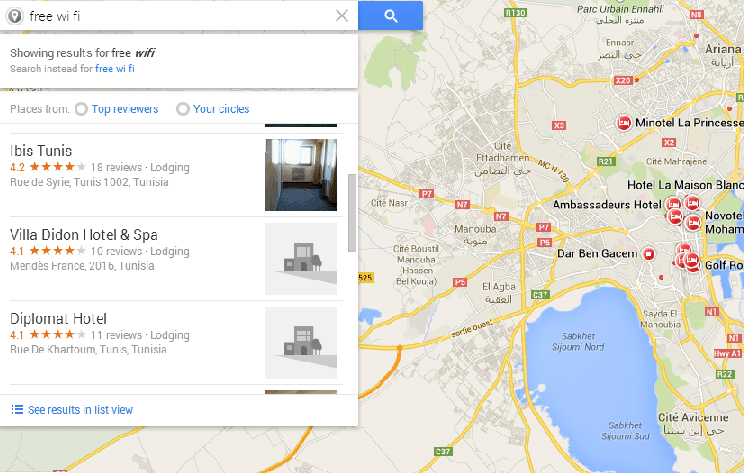
Use Google Maps type in the area you’re visiting, then in the ‘Explore this area. Search nearby’ type in free wifi, and you’ll get a list and locations of places with free wifi available – see above.
JiWire for I-phones has a database of just under 900,000 wifi hotspots in 145 countries throughout the world.
Free-hotspot.comwith over 5,000 locations in 21 countries across Europe.
Buy a holiday phone
It’s usually cheaper to buy unlocked phones from e-Bay and Amazon and the same goes for SIM cards if you buy them in a local store when you arrive. The downside: You don’t have phone access when you land and you don’t have it all set up in advance – friends and family wont have your number.
Alternatively take one of your old mobiles with you, it may not have all the bells and whistles of your current one, but is one less expense to lay out and buy and install a SIM when you’ve got where you’re going.
Summary
If possible, the best option is to use wi-fi when travelling abroad – if you’ve done your homework, it will often be free, and even if you have to pay the local hotel or cafe it’s more than likely to be considerably cheaper than using data roaming.
If you do have to use data roaming, then it is still possible to cut the cost. If you’re a monthly contract customer and you’re only likely to use a few megabytes of data, get an overseas data bundle from your network.
Turn off automatic updates.
Avoid downloading music, watching videos etc – see my post on how to stop Facebook automatically playing videos, here.
Do not use your phone on the plane.
Check the small print so you know exactly what you’ll be paying.
You may have seen the advert from Threewhose customers can use their mobiles abroad at no extra cost, limited to the following countrys: Australia, Austria, Denmark, Finland, France, Hong Kong, Indonesia, Israel, Italy, Macau, Norway, Republic of Ireland, Sri Lanka, Sweden, Switzerland, USA.
NB You’ll need to have been with Three for 30 days before you can use your phone abroad.
One more thing, have the paracetamol handy for after your research. I needed them.
Happy holidays.
Manage Cookie Consent
We use cookies to optimise our website and our service.
Functional
Always active
The technical storage or access is strictly necessary for the legitimate purpose of enabling the use of a specific service explicitly requested by the subscriber or user, or for the sole purpose of carrying out the transmission of a communication over an electronic communications network.
Preferences
The technical storage or access is necessary for the legitimate purpose of storing preferences that are not requested by the subscriber or user.
Statistics
The technical storage or access that is used exclusively for statistical purposes.The technical storage or access that is used exclusively for anonymous statistical purposes. Without a subpoena, voluntary compliance on the part of your Internet Service Provider, or additional records from a third party, information stored or retrieved for this purpose alone cannot usually be used to identify you.
Marketing
The technical storage or access is required to create user profiles to send advertising, or to track the user on a website or across several websites for similar marketing purposes.